Bangladesh needs a reliable and continuous supply of electricity to support its development and sustained economic growth. It also needs to reduce its dependence on imported fuel. The country’s power sector has expanded rapidly, yet it still relies heavily on fossil fuels. Natural gas remains the largest source of electricity, followed by coal and oil-based power plants. Recent analysis shows that natural gas accounts for about 42 per cent of the country’s power generation capacity. Coal accounts for about 23 per cent, furnace oil for about 19 per cent, and imported electricity for another 9 per cent. Renewable energy and hydropower together contribute only about 3.7 per cent. This dependence creates two major challenges. Imported fuel requires foreign currency, while rising global prices put pressure on foreign exchange reserves and consumers. Fossil fuels also emit greenhouse gases. Given the climate risks Bangladesh faces, this is a serious concern. The country is vulnerable to floods, cyclones, river erosion, salinity and extreme heat. Cleaner energy is therefore both an economic and an environmental necessity.
The government has set a clear target
At least 20 per cent of electricity should come from renewable sources by 2030, rising to 30 per cent by 2040. The National Renewable Energy Development Strategy 2026-2030 gives special importance to rooftop solar. It targets 5,500 megawatts of rooftop solar and 4,500MW of ground-mounted solar capacity by 2030. Palli Karma-Sahayak Foundation (PKSF) has launched a new programme, the ‘Renewable Energy Financing Programme,’ to help rural families, farmers, small businesses and institutions install solar systems.
PKSF has worked for decades through partner organisations across Bangladesh. It currently works with more than 167 active partner organisations, reaching 22 million participants. These organisations serve people in almost every upazila in the country. This network is important. Solar panels are of little use if people cannot afford to install or maintain them. PKSF plans to provide financing, technical support and local delivery through its partners. It already supports about 3MW of solar power through small-scale initiatives, including solar irrigation, safe water supply, support for micro-entrepreneurs and livelihood activities. The new programme will offer long-term loans on favorable terms, along with partial incentives, to reduce the upfront cost of solar systems.
Rooftops as power plants
A major part of the plan is rooftop solar. Local factories, shops, small clinics, educational institutions, religious institutions and other buildings often have large, unused rooftops. These rooftops can become small power stations. Under the scheme, users can install solar panels on their rooftops and use the electricity they generate. If they produce surplus electricity, they can feed it into the national grid through net metering. This model offers clear benefits. It reduces electricity bills and eases pressure on the grid during the day, when solar power generation is at its peak. Rooftop solar is central to the government’s renewable energy strategy.
Help for farmers
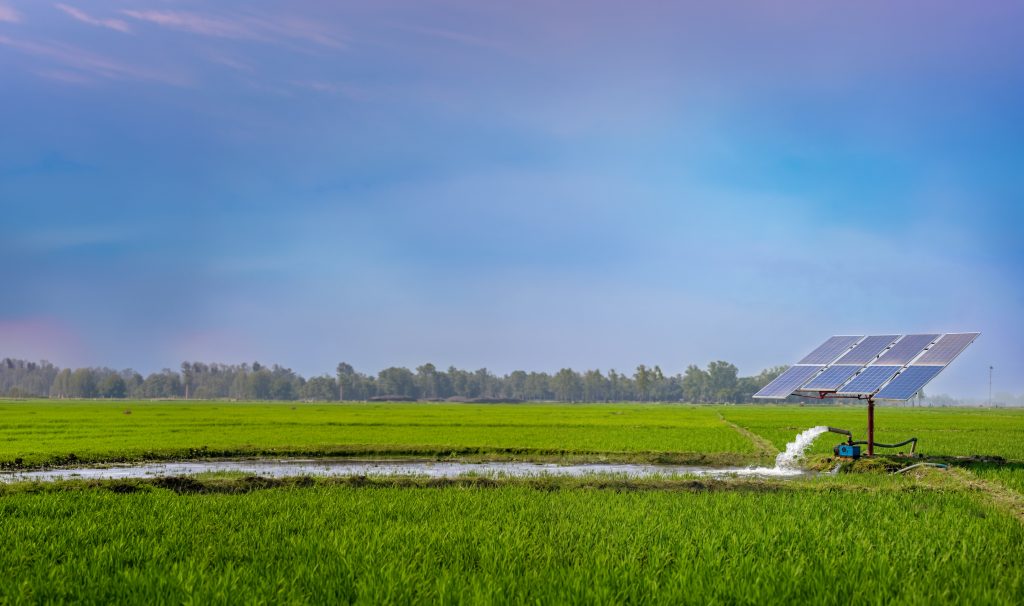
Agriculture is another major target. Many farmers use diesel pumps for irrigation. Diesel is costly and can be difficult to obtain, and its price can fluctuate suddenly. It also causes pollution. PKSF wants to expand the use of solar irrigation pumps. These pumps can support drip irrigation and alternate wetting and drying methods. They can also support seed production and grain storage. The programme will also support fish farming and livestock activities.
Safe water for coastal areas
Many coastal and remote areas face shortages of safe drinking water. In many places, salinity makes groundwater unsafe to drink. PKSF plans to finance solar-powered reverse osmosis plants and deep tube wells. These systems can provide safe water without relying solely on diesel or grid electricity.
New models for land and water
Bangladesh has limited land, but it also has many ponds, beels and haors. PKSF is considering two models that make more efficient use of available space. The first is floating solar, in which solar panels are installed on ponds, beels and other water bodies. These systems generate electricity without occupying farmland. The second is agrivoltaics. In this model, panels are installed above crops, allowing farmers to continue growing food beneath them. The same land can therefore produce both crops and electricity.
Support for small businesses
Small businesses are the backbone of the rural economy. Welding workshops, printing presses, mobile repair shops, beauty parlours and small manufacturers all need a reliable power supply. PKSF plans to introduce a ‘Solar Micro-Enterprise Programme’ to help these businesses install solar systems. This could reduce their production costs and protect them from power cuts. PKSF is also considering community-based solar centers.
Green jobs for young people and innovative business models for mitigation
The programme is not only about solar panels and loans, it also aims to create jobs. PKSF plans to introduce a ‘Green Entrepreneurship Programme.’ Young people will receive training to become solar technicians, installers and local entrepreneurs. They may also receive start-up support and loans on suitable terms. This could create a new rural workforce. Solar systems require installation, cleaning, repair, battery management and customer service.
Charging stations for electric vehicles
Electric three-wheelers, battery-powered rickshaws and electric motorcycles are becoming increasingly common in Bangladesh. However, charging them can put additional pressure on the grid. PKSF plans to finance solar-powered charging stations for easy-bikes, rickshaws and motorcycles. This could reduce reliance on electricity generated from fossil fuels and make electric transport cleaner.
Climate finance and carbon income
Small solar projects often struggle to attract international climate finance because they are scattered and relatively small. Establishing appropriate monitoring, reporting and verification (MRV) systems and preparing the required documentation can also be complex. PKSF plans to bundle many small projects into a larger carbon programme. This may help the programme access funding from international sources. Potential sources include the Green Climate Fund (GCF), the Adaptation Fund (AF), the World Bank, the Asian Development Bank (ADB) and the International Fund for Agricultural Development (IFAD).
PKSF’s offices and those of its partner organisations
PKSF has already installed a rooftop solar system on one of its two buildings. It wants its partner organisations to set an example as well and has directed them to install solar systems at their permanent offices. PKSF also plans to discuss policy measures with the Microcredit Regulatory Authority (MRA). The aim is to encourage all microfinance institutions to use solar power in their offices.
Government support is a key part of PKSF’s plans for solar power generation. On September 14, 2026, the Finance Division of the Ministry of Finance issued a circular approving a Tk 5,000 million loan for PKSF at an interest rate of 0.5 per cent. The loan has a one-year grace period and a repayment period of 10 years. PKSF will on-lend the funds to partner organisations at an interest rate of 2 per cent. Partner organisations will have up to five years to repay their loans, including a six-month grace period. The funds will then revolve for further lending. Customers will pay a maximum interest rate of 6 per cent.
A practical path forward
This programme will help families and small enterprises become ‘prosumers’ – both consumers and producers of electricity. Bangladesh’s share of renewable energy remains low. However, rooftop solar systems can be deployed more quickly. They do not always require new land or long transmission lines, and they can bring the benefits of clean energy directly to users.
Bangladesh cannot solve its energy challenges through a single policy or institution. However, it can develop many small solutions that add up to a significant impact. PKSF’s programme is one such solution.