
Dr AKM Nuruzzaman
A home is more than four walls and a roof. It is an address. A place of safety. A source of dignity. For low-income families, a home is the foundation of a better life. Poverty and unsafe housing are closely linked. Poor families often live in fragile homes. Floods and cyclones strike. Homes are damaged or destroyed. Savings disappear. Debts grow. Families must start all over again. This is how the cycle of poverty continues. Palli Karma-Sahayak Foundation (PKSF) is helping low-income families break this cycle through affordable housing loans and climate-resilient homes. Working through its Partner Organizations (POs), PKSF has undertaken several initiatives to address the housing needs of vulnerable communities.
The demand for housing loans in Bangladesh is high. Yet commercial banks are often reluctant to provide small loans because the risks are high and returns are low. Banks also require land ownership documents and collateral, which many poor families cannot provide. As a result, these families build their homes gradually with whatever little savings they have. The structures are often weak, and construction frequently remains unfinished. PKSF has stepped in to bridge this gap. Its housing loans come with easier terms, require no collateral, offer longer repayment periods than conventional microcredit and carry lower interest rates.
In 2016, PKSF launched the Low Income Community Housing Support Project (LICHSP) with funding from the World Bank. Housing loans were provided in 13 towns through seven Partner Organizations. By May 2021, a total of 12,002 members had received loans amounting to BDT 2.55 billion. Of these loans, 58.65 percent went to low-income families with a monthly income of BDT 25,000, exceeding the target of 40 percent. A World Bank mission rated the project ‘highly satisfactory,’ the highest rating awarded by the World Bank in Bangladesh. The results on the ground were equally encouraging. Borrowers reported better health, improved learning environments for their children and greater social recognition. In some cases, better housing also created opportunities for small businesses.
Building on the experience of LICHSP, PKSF launched its own housing loan program, Abason, in 2019 with funding from its own resources. As of June 2026, the program covered 160 upazilas in 42 districts through 360 branches of 32 Partner Organizations. A total of 52,184 families had received loans amounting to approximately BDT 14.37 billion. Some families used the loans to build new homes. Others repaired or expanded their existing ones. Homes became stronger and more comfortable, with better ventilation, natural lighting, sanitation facilities and improved kitchens.
Can a home really reduce poverty?
PKSF has identified six ways in which better housing can help families escape poverty. First, a home gives a family an identity and a recognized place in society. Second, it empowers women. Women often spend more time at home than other family members. A safe and private living space protects their dignity, while homeownership, including joint ownership, strengthens their voice and bargaining power within the family. Third, a home supports education. Adequate light and ventilation create a better environment for children to study. When families must spend their limited savings repairing homes after every flood or cyclone, little or no money may be left for education.
Fourth, a home protects health. Damp and overcrowded living conditions increase the risk of respiratory problems and other diseases. Fifth, a home is an asset. For many poor families, it is their most valuable possession and a foundation for building other assets. Sixth, housing creates employment. Construction generates income for masons, carpenters, laborers and building material suppliers. Many families also use their homes as workplaces, running small shops, tailoring businesses or poultry-rearing activities.
Climate-resilient homes offer greater protection
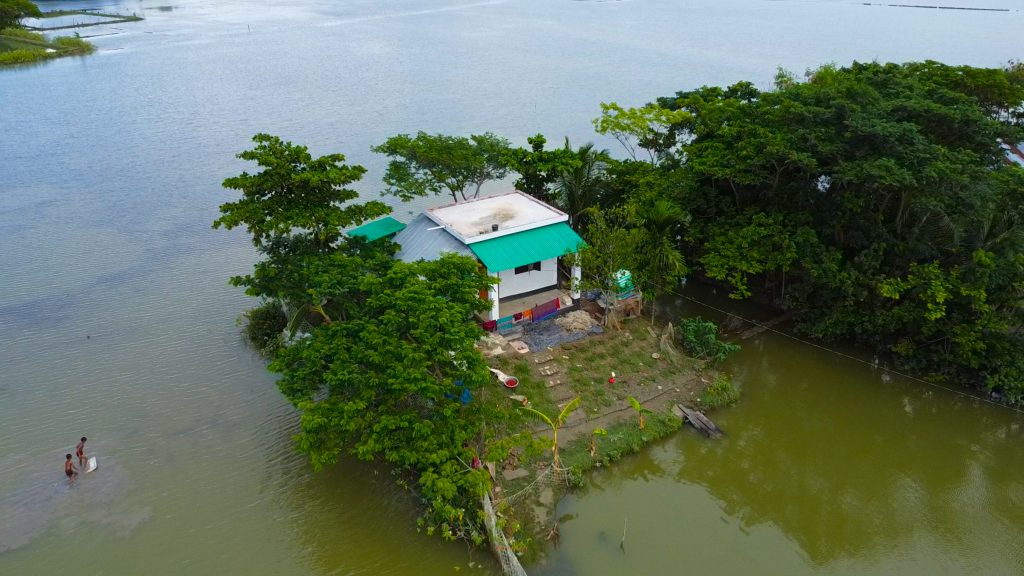
Bangladesh is among the countries most vulnerable to climate change. Coastal communities face cyclones and increasing salinity, while northern districts experience floods and river erosion. In these areas, conventional housing is often not enough. Families need homes that can withstand climate-related disasters. With funding from the Green Climate Fund (GCF), PKSF is implementing the Resilient Homestead and Livelihood Support to the Vulnerable Coastal People of Bangladesh (RHL) project. It covers 21 upazilas across seven coastal districts: Khulna, Bagerhat, Satkhira, Barguna, Patuakhali, Bhola and Cox’s Bazar. Eighteen Partner Organizations are involved in its implementation.
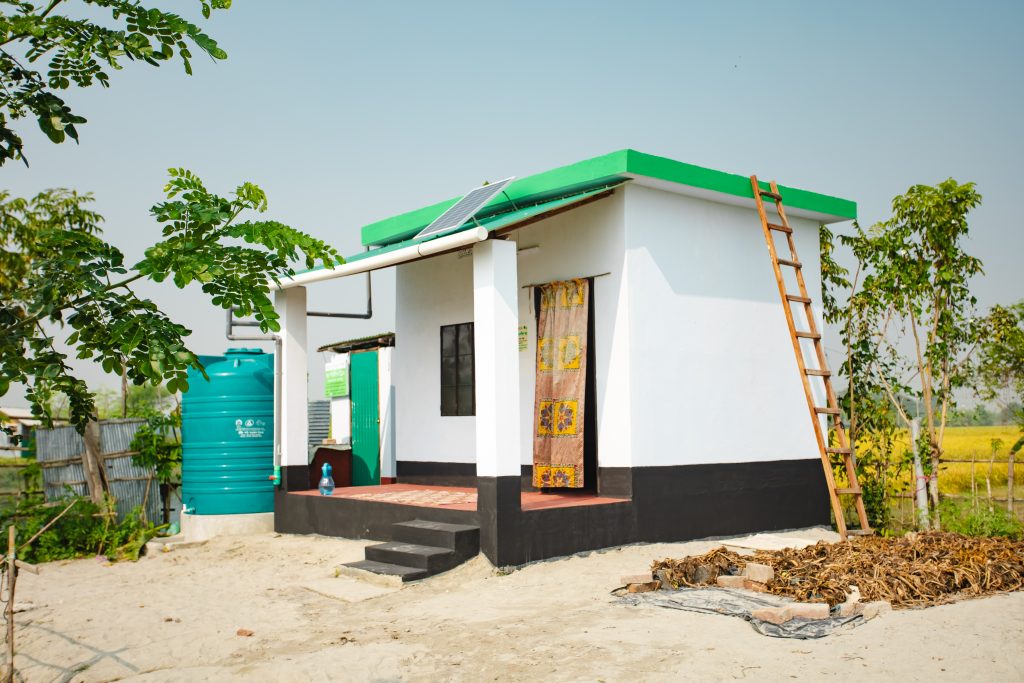
The project aims to develop 3,000 climate-resilient homesteads. Each home features a raised plinth, a strong structure, safe sanitation facilities, rainwater harvesting, solar power and an improved cookstove. Storm-resistant trees are also being planted around the homes. More than 250,000 trees have already been planted. In May 2025, a cyclone damaged more than 50,000 homes across seven districts. Yet 700 families living in RHL-supported homes remained safe. In February 2026, an earthquake struck Ashashuni in Satkhira. According to reports, the brick-built houses constructed under the project suffered no damage.
The project also helps families strengthen their livelihoods. Support is being provided for raising goats and sheep on elevated platforms, cultivating salt-tolerant vegetables, growing ginger in sacks and farming crabs. In 2025, a total of 6,188 ginger farmers earned approximately BDT 36 million through their farming activities.
Raising homesteads above floodwaters
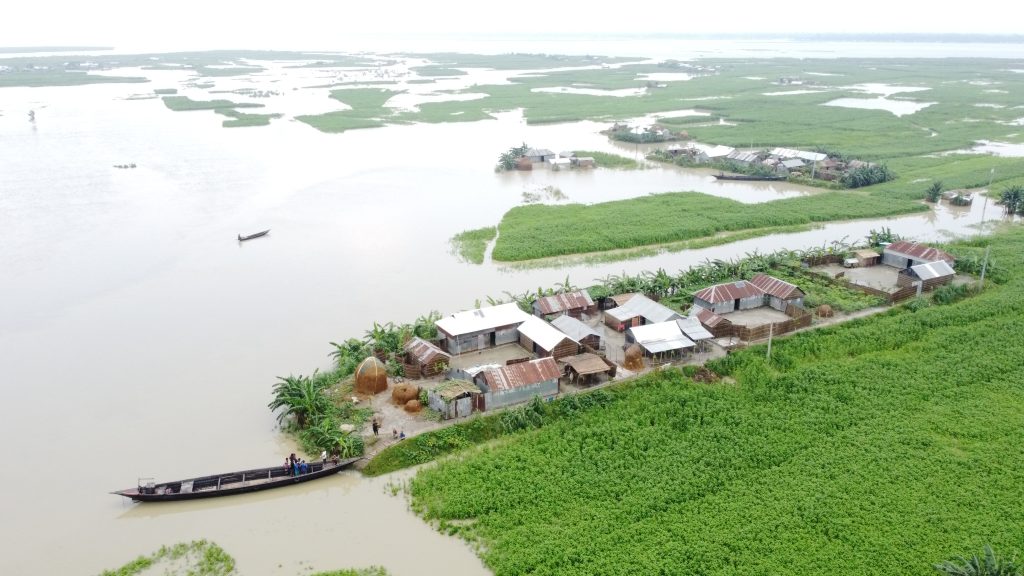
PKSF has followed a similar approach in flood-prone areas of northern Bangladesh through the Extended Community Climate Change Project – Flood (ECCCP-Flood). With a total budget of USD 13.33 million from GCF and PKSF, the project was implemented in Kurigram, Lalmonirhat, Nilphamari, Gaibandha and Jamalpur. Its main focus was simple: raising homesteads above flood levels. Homestead plinths were raised above the highest previously recorded flood levels in their respective areas. A total of 15,563 homesteads have been elevated. Tubewells and climate-resilient toilets were installed on the raised land, helping families access safe drinking water throughout the year, even during floods.
The project also provided flood-tolerant rice seeds and training on vegetable cultivation in char areas. Around 2,000 elevated livestock shelters were built, alongside loans to support goat and sheep rearing. Female-headed households received priority. Under a similar project, the Community Climate Change Project (CCCP), another 5,759 homestead plinths were raised.
A new opportunity to reach more families
A new project now offers the opportunity to expand affordable housing support on a much larger scale. The Asian Development Bank (ADB) is providing a USD 100 million loan to support the initiative. Through PKSF and its Partner Organizations, at least 40,000 families will receive housing loans by 2031. At least 32,000 of the beneficiaries will be women, while at least 24,000 borrowers will come from disaster-prone areas. The loans will be long-term and collateral-free. Joint participation by husbands and wives will also be encouraged to strengthen women’s housing security.
These initiatives highlight one important fact: housing is not merely about physical infrastructure. It is also a pathway out of poverty. A safe home strengthens a family’s identity, empowers women, supports education, protects health, builds assets and creates employment. A climate-resilient home goes a step further. It protects these gains from the devastating effects of natural disasters.
Yet significant challenges remain. Funding is limited compared to the growing demand for affordable housing. Construction costs continue to rise, while climate risks are becoming more severe. Addressing these challenges will require greater and more targeted investment. It will also demand coordinated efforts from the government, development partners, Partner Organizations and other stakeholders.
A safe home gives a family more than a roof over its head. It gives them the confidence to stand tall and build a better future.

Dr AKM Nuruzzaman is Senior General Manager at PKSF