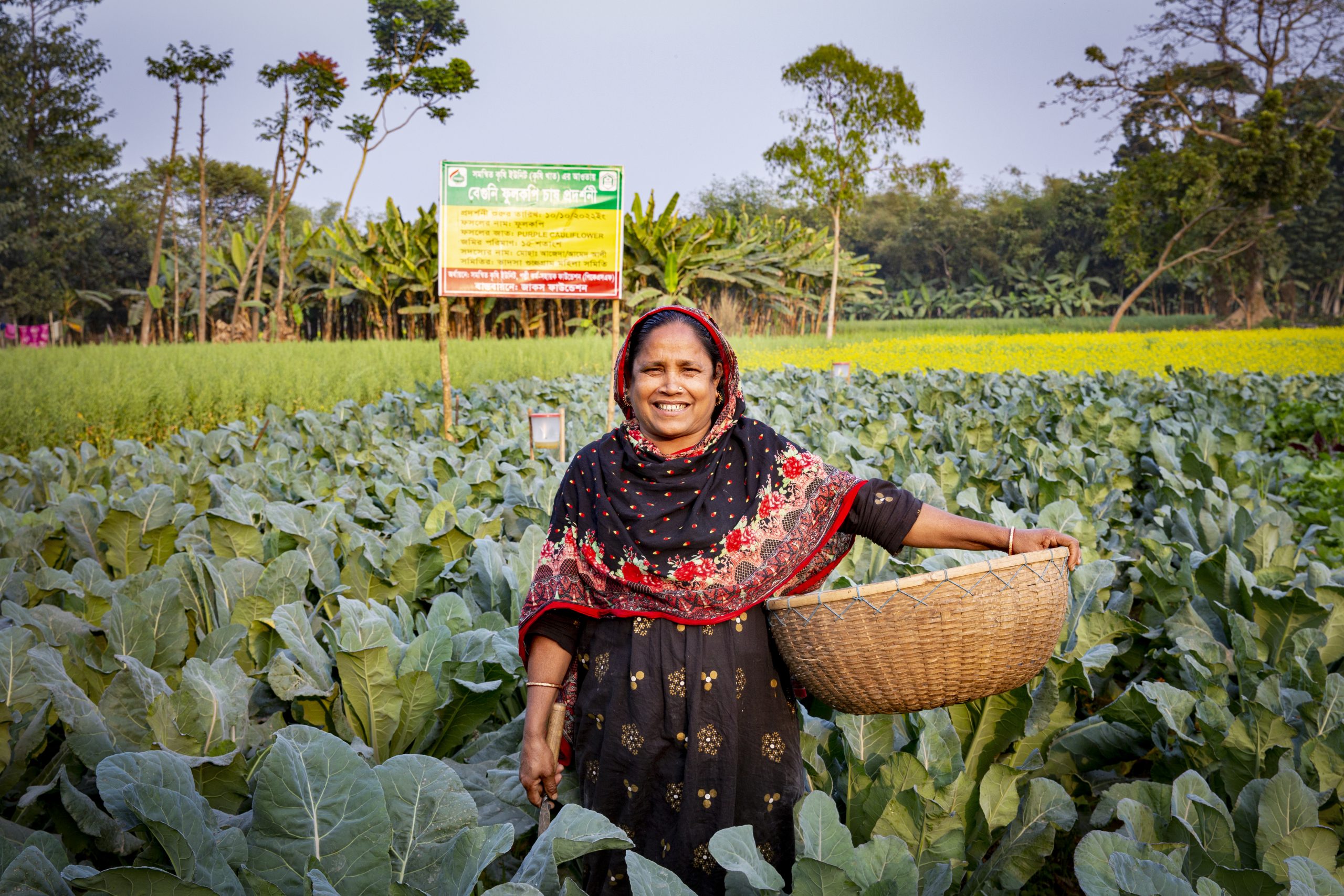
Overview
PKSF formally launched agricultural development as a mainstream program in June 2013. In 2026, the program was restructured and reframed in alignment with the PKSF Strategic Plan 2025–2030, and formally institutionalized under its current name.
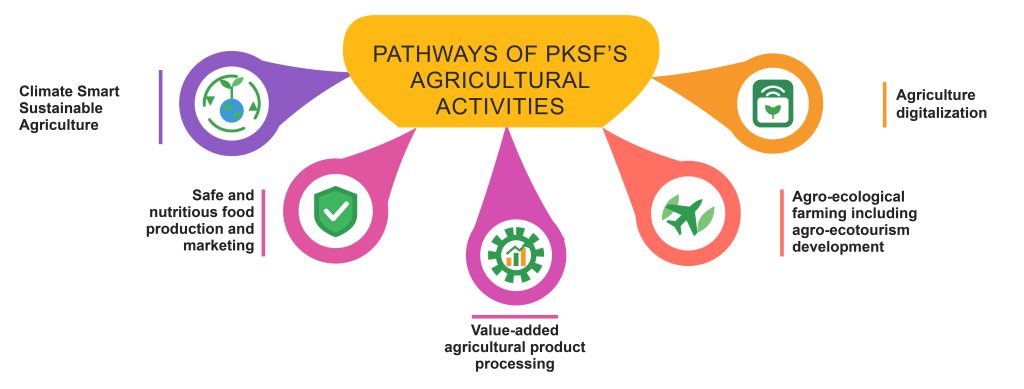
The program promotes sustainable and innovative agricultural development through agro-ecological practices, the adoption of Good Agricultural Practices (GAP), and digitalization. It emphasizes strengthening the circular economy, creative economy and farmers’ markets. It builds capacity, drives policy engagement, and delivers market-oriented agricultural business services to enhance the income and resilience of smallholder entrepreneurs.
The program also places strong focus on monitoring, evaluation, research, and knowledge management to ensure effective implementation and scalability. Equally, it addresses climate and agro-ecological risks through resilient practices, early warning systems, and sound financial management.
Achievement of the Agro-Microenterprise Development Unit:
Since its inception, the program has been at the forefront of disseminating proven agricultural technologies across three major sectors. As of the fiscal year 2024–25, a total of 118 technologies have been disseminated — 34 in the crop sector, 41 in fisheries, and 43 in livestock.
Impactful Agricultural Initiatives
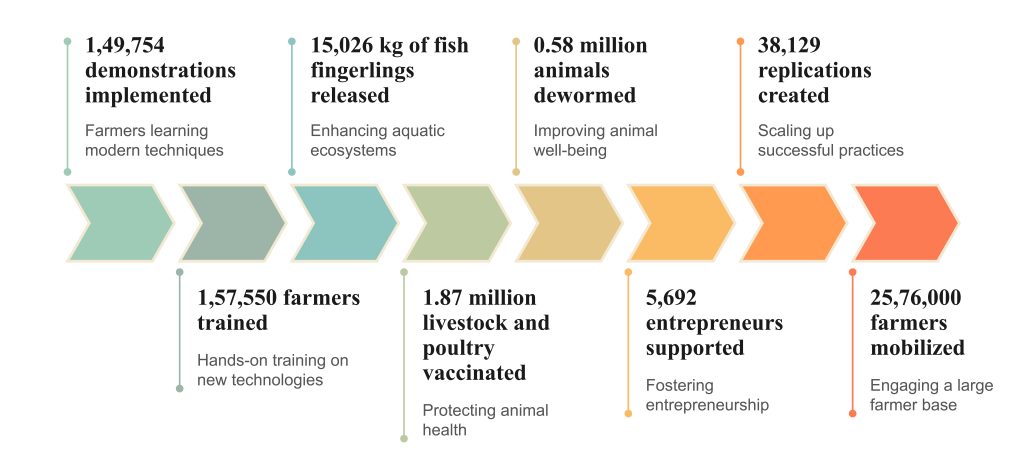
Beyond training and technology dissemination, the program has distributed essential agricultural inputs including fruit bags, pheromone traps and lures, and coloured traps directly to its members. Fish fingerlings have been released into open water bodies to support aquatic ecosystem restoration, while livestock health has been strengthened through targeted vaccination and deworming campaigns.
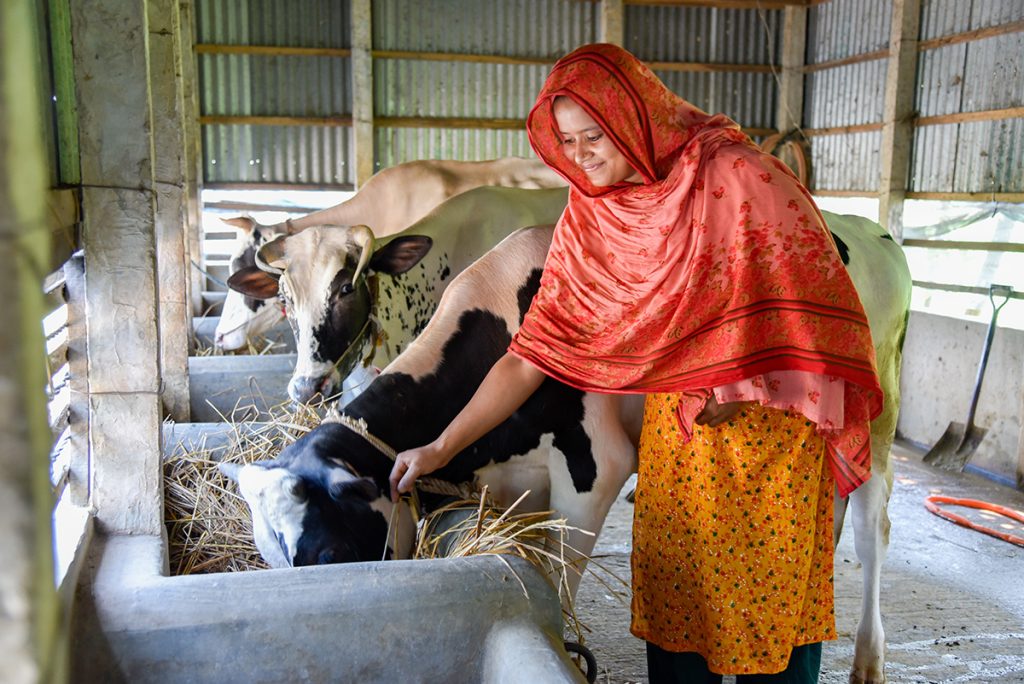
The program has also actively fostered entrepreneurship, creating numerous business clusters and supporting 5,199 entrepreneurs, while generating 37,799 technology replications and mobilising 256,000 farmers across the country. It also introduces Black Soldier Fly (BSF) larvae as an alternative fish feed; promotes renewable energy-based irrigation systems such as solar-powered drip and sprinkler irrigation, solar based aerator in fish pond; integrating IoT-based smart sensors into agricultural practices and supports technology-driven fisheries sanctuary management.
Institutional Linkages
The program maintains strong institutional linkages with research institutions, extension agencies, universities, and other relevant organisations. To date, PKSF has signed Memoranda of Understanding (MoUs) with 10 institutions. An additional MoU with the Bangladesh Agricultural Research Council (BARC) is currently in progress.
These partnerships reflect PKSF’s commitment to collaborative knowledge exchange, technical cooperation, and effective resource mobilisation in support of agricultural development.
Policy Alignment
PKSF’s Agro-Microenterprise Development Unit is aligned with the Government of Bangladesh’s active agricultural policy framework, including the National Agriculture Policy 2018, Bangladesh Good Agricultural Practices (GAP) Policy 2020, National Agricultural Mechanisation Policy 2020, and National Agricultural Marketing Policy 2023. These policies collectively prioritise food security, sustainable production, technology adoption, and stronger market linkages — all of which are central to PKSF’s field-level activities. PKSF’s Strategic Plan 2025–30 reflects this national agenda, and through its financing, technology dissemination, and capacity-building initiatives, PKSF is well-positioned to contribute meaningfully to the Government’s agricultural development priorities.
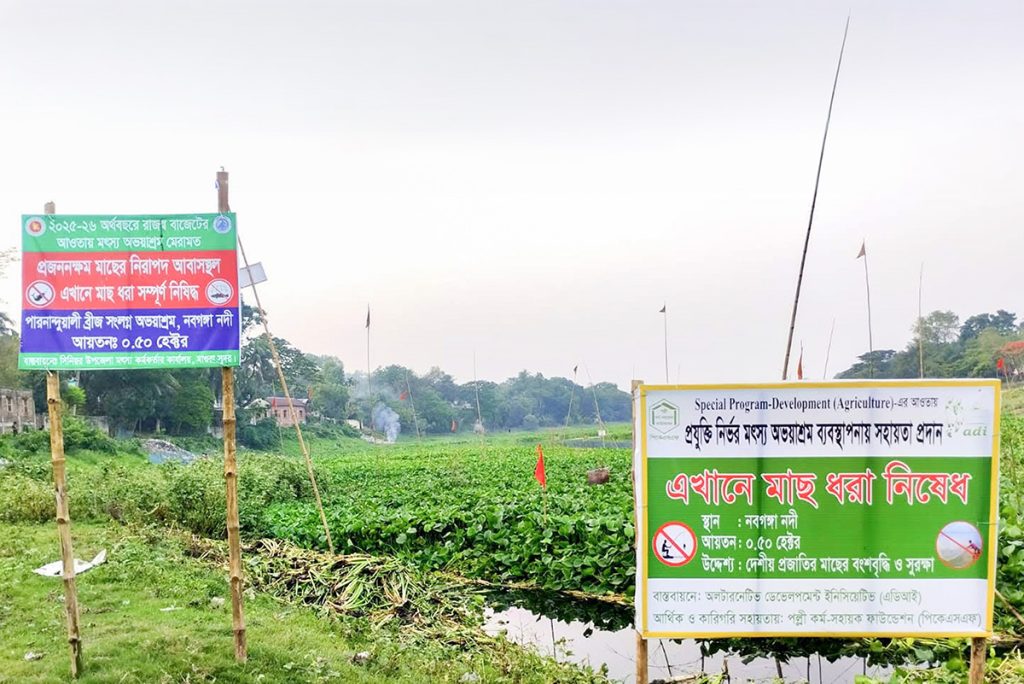
Technology based fisheries sanctuary management
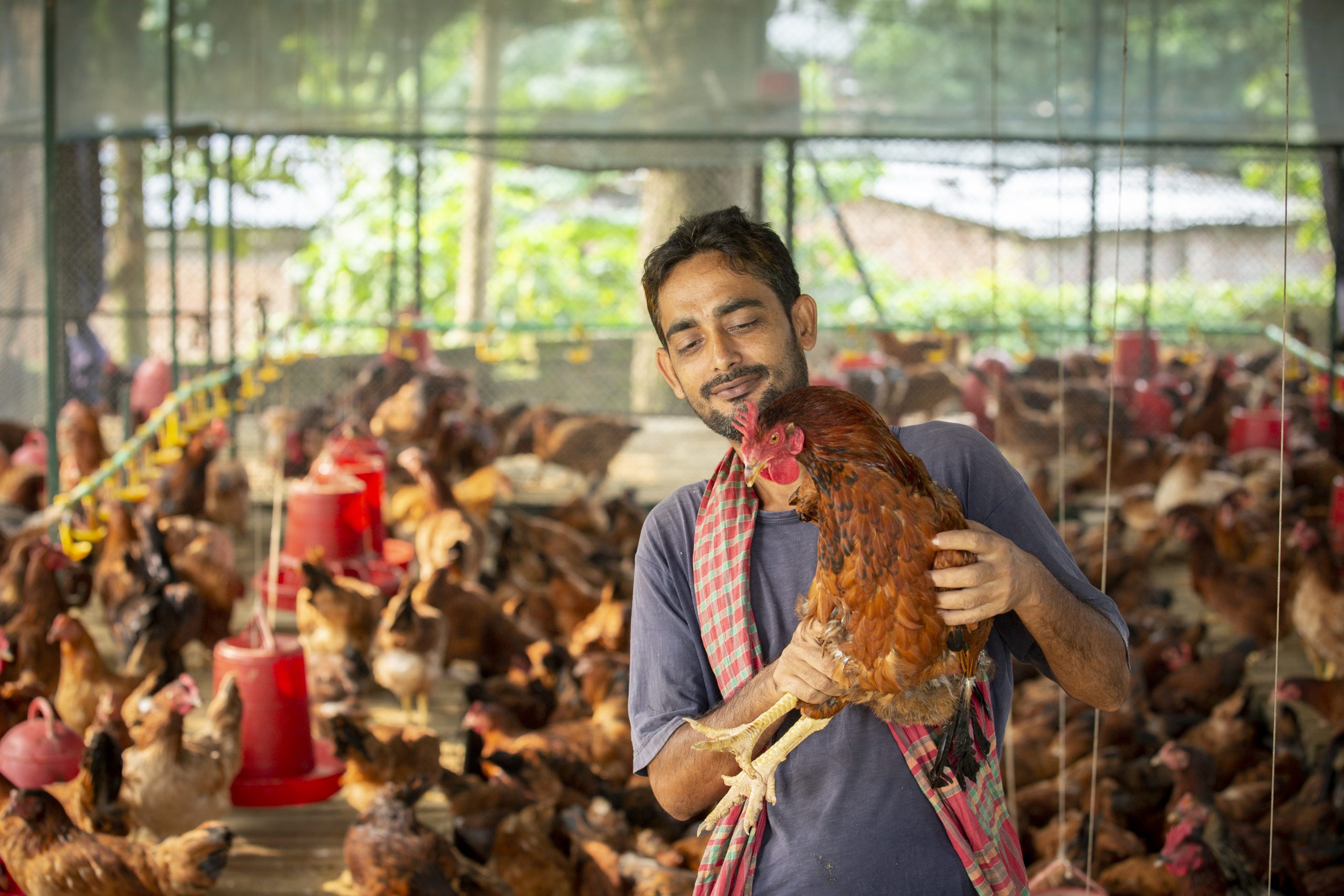
Developing entrepreneurs in livestock rearing