
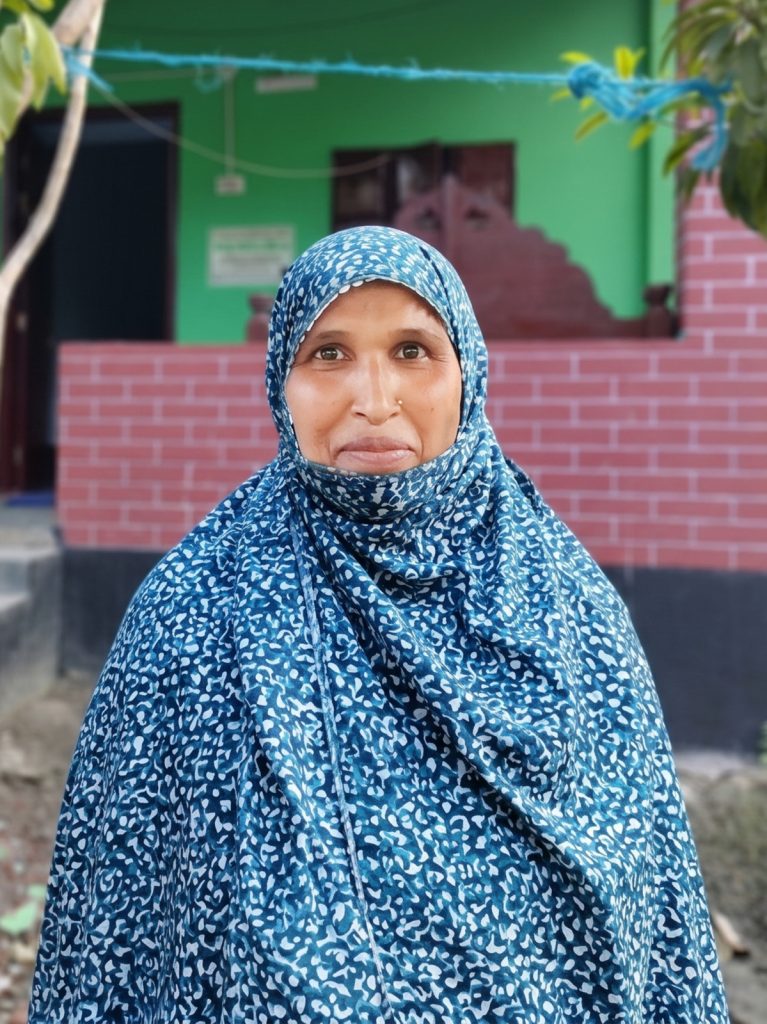
On a small plot of land in Koyra, Khulna, Anjuara Khatun lives with her family of four. Her husband, Md Billal Hossain, earns a modest living as a van driver. The family lives on a limited income. But the arrival of the monsoon brought a different kind of worry. As the rain grew heavier, Anjuara feared that water would flood their house. How would she keep her children safe? How could she protect their few belongings? Year after year, she had come to accept these hardships as an unavoidable part of life.
Koyra is one of Bangladesh’s most climate-vulnerable coastal areas, frequently exposed to heavy rainfall, waterlogging, cyclones, and storm surges. For families living in fragile houses, each monsoon brings renewed fears of damage and costly repairs.
But the monsoon of 2026 told a different story for Anjuara. In July, prolonged heavy rainfall flooded the yards and houses of several neighboring families. Yet not a drop of floodwater entered her house. By then, her homestead had been raised and a sturdy, climate-resilient house built on the elevated ground. For the first time in years, she could face the heavy rains without fearing for her family’s safety.
“Whenever it rained heavily, I used to be afraid. I would worry about where to keep our belongings and how to keep my children safe. But this time, not only was my family safe, I was also able to provide shelter to some of our neighbors,” Anjuara recalls.
One of those neighbors was Md Ayub Dhali. As water began entering his house, he found himself in a desperate situation. With his wife, Peru Begum, and their two children, he had nowhere safe to go. Gathering some clothes, dry food, and other essentials, the family sought refuge in Anjuara’s house.
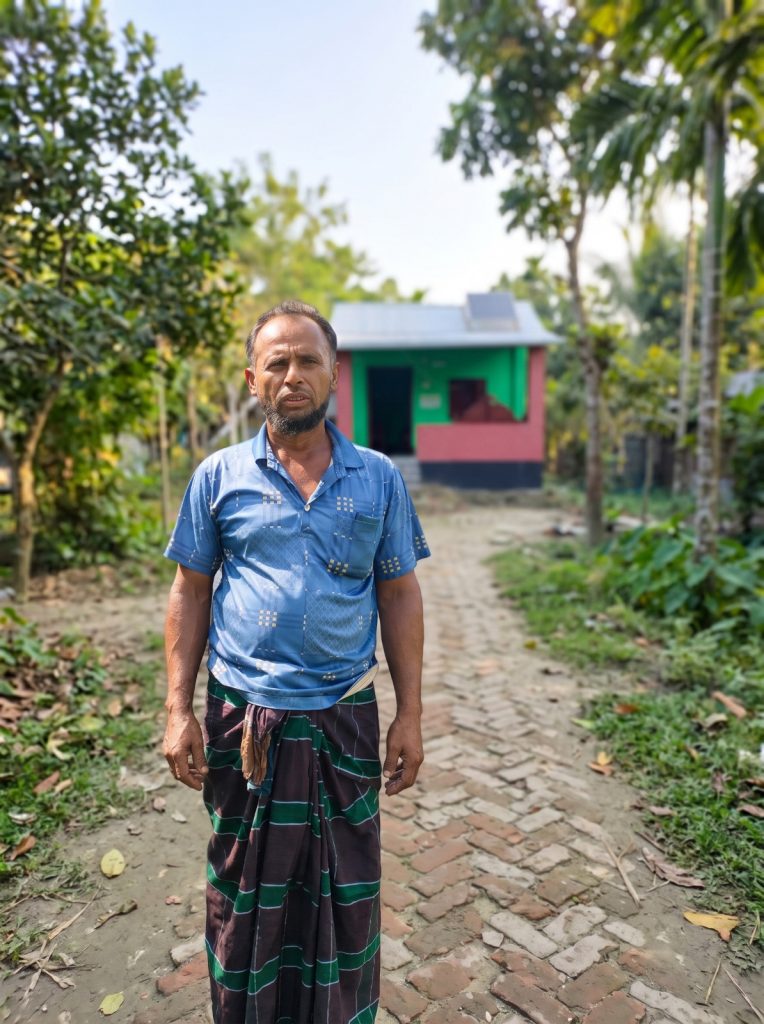
“When water started entering our house, I didn’t know where to take my wife and children. Fortunately, we were able to take shelter at Anjuara’s house nearby. Having a safe house so close to us during the emergency meant I could keep my family safe,” Ayub says.
That day, six neighbors, including Ayub and his family, found shelter in Anjuara’s house. A house built to protect one family had become a refuge for others in need.
For low-income families, a house is often their most valuable asset. It protects their belongings, their children’s schoolbooks, and the few resources they depend on for a living. When disaster strikes, repairing or rebuilding a damaged house can drain their hard-earned savings. Repeated disasters make recovery even harder, disrupting daily life, children’s education, and access to basic necessities. For vulnerable coastal families, a safe and durable house is therefore more than just shelter. It offers security, stability, and hope for a better future.
To help vulnerable coastal communities build resilience, PKSF is implementing the Resilient Homestead and Livelihood Support to the Vulnerable Coastal People of Bangladesh (RHL) project. Funded by the Green Climate Fund (GCF), the project supports the construction of climate-resilient houses for poor and extremely poor families, helping them better withstand recurring climate-related disasters.
Anjuara’s house was built under this project. To reduce flood risks, homesteads are generally raised by three to three and a half feet, while houses are built on strong foundations to withstand high winds and cyclones. They also feature 3,000-liter rainwater harvesting systems, solar power, improved cookstoves, and safe sanitation facilities, making everyday life safer and easier.
Launched in August 2023, the five-year RHL project is being implemented through 18 Partner Organizations across 21 upazilas in seven coastal districts of Bangladesh. The project aims to construct 3,000 climate-resilient houses, of which 1,802 had been completed as of September 2026. Overall, it seeks to strengthen the climate resilience of more than 350,000 vulnerable people.
Cyclone shelters play a vital role in saving lives during disasters. However, reaching them can be difficult, especially for families with children, older people, or members with disabilities. In such situations, a sturdy house nearby can provide a safe refuge, protecting not only the family living there but also neighbors in need.
For Anjuara, the sound of monsoon rain once brought fear and uncertainty. Today, her house offers safety not only to her own family but also to neighbors in need. More than a roof over her head, it has given her the confidence to face adversity with dignity and the ability to extend a helping hand when others need it most.