
For years, the rising cost of irrigation had been a major concern for Abdul Mannan, a relatively well-off farmer in Chapainawabganj. Despite his financial means, keeping his paddy fields watered was becoming increasingly expensive. Each irrigation season brought another burden.
But things have begun to change. The re-excavation of the Jolahar Canal, running alongside his fields, has brought back a source of water that had almost disappeared. Once buried under silt and vegetation, the canal now holds water that farmers can use to irrigate their crops. For Abdul Mannan, it has meant a substantial cut in farming costs.
“I cultivate rice on a large area of land, and irrigation costs me heavily. But the re-excavation of the canal has reduced my expenses by more than 60 per cent,” he said.
The restored canal has brought relief to nearby farmers, although those living beyond its reach still struggle with expensive irrigation.
Such hardship is familiar across the drought-prone Barind region, particularly in Chapainawabganj, Naogaon and Rajshahi. Rainfall has become increasingly erratic, dry spells are lasting longer, and underground water reserves are under growing pressure. For farmers, every drop of water matters.
Learning to Grow More with Less Water
In Patnitala, Naogaon, 40-year-old rice farmer Musabber Bappi knows this struggle all too well. Year after year, he watched his deep tubewell yield less water, making it increasingly difficult to keep his paddy fields flooded throughout the growing season.
Like generations of farmers before him, Bappi had relied on continuous flooding to grow rice. But the practice requires huge amounts of water, much of it pumped from underground reserves that are gradually running low.
Realising that he could no longer depend on the old method, Bappi decided to try something different. Through a Climate Change Adaptation Group (CCAG) in Naogaon, he learned about Alternate Wetting and Drying (AWD), a water-saving technique promoted under the Extended Community Climate Change Project-Drought (ECCCP-Drought), funded by the Green Climate Fund (GCF).
The idea was simple: instead of keeping the fields flooded all the time, farmers could allow the water to recede and irrigate only when necessary.
Bappi installed a small perforated PVC tube in his field to monitor the water level beneath the soil. He now irrigates when the water inside the tube falls about six inches below the soil surface.
The change has brought encouraging results. He estimates that he has reduced water use by 20 to 30 per cent, saving money on irrigation. More surprisingly, his harvest has increased rather than declined.
“I harvested about 200 maunds of rice this year, compared with 180 maunds last year, from the same land,” he said, adding that his irrigation costs had fallen by around 30 per cent.
For Bappi, a simple change in farming practice has offered a way to produce more rice with less water.
Bringing Forgotten Waterways Back to Life
But the water crisis extends beyond farmland. During the dry winter months, many rural families in Naogaon struggle to find drinking water as shallow underground sources dry up. Women often have to walk long distances to collect water from tubewells that still have a supply.
“There is very little rainfall, and underground water is becoming scarce. We face many difficulties and have to walk long distances to collect drinking water,” said a woman at a meeting of a Climate Change Adaptation Group in Naogaon Sadar upazila.
Her words reflect a hardship shared by many families across the Barind region. As groundwater levels fall, the struggle reaches beyond the fields and into household courtyards, making even everyday activities difficult.
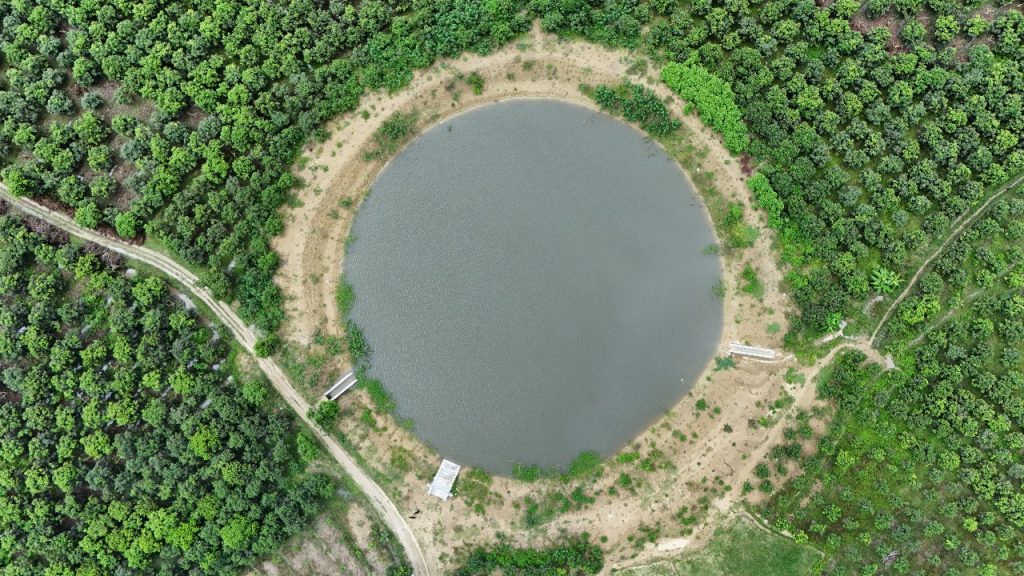
One way to ease the pressure is to restore the canals and ponds that once sustained rural life. Many of these water bodies have gradually disappeared beneath layers of silt, weeds and vegetation. Re-excavation is now bringing some of them back to life, creating new sources of water for irrigation and household use.
A recent visit to the re-excavated Jolahar Canal in Jhilim Union of Chapainawabganj and several ponds in Naogaon offered a glimpse of this change. The canal, once a silt-filled, almost forgotten waterway, now holds water for nearby farmland. Its green surroundings stand in welcome contrast to the dry landscape.
For local people, the canal means more than cheaper irrigation. It also supports household activities, duck rearing and fishing.
“It is more than a water conservation project; it is our lifeline,” said a local farmer who uses the water for household needs, raises ducks and catches fish from the canal.
Storing Rainwater for the Dry Days
The return of water to old canals and ponds is only part of a wider effort to address the region’s growing water crisis. The region also needs to replenish the underground reserves on which farming and rural communities depend.
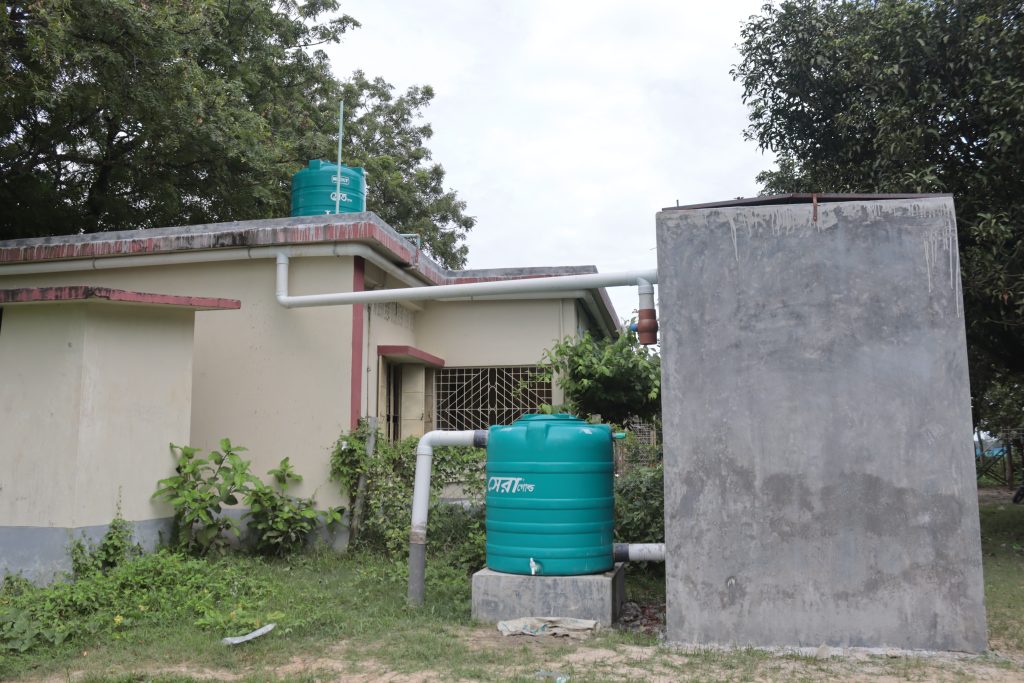
This is where Managed Aquifer Recharge (MAR) comes in. The system collects rainwater or surplus surface water, filters it and channels it underground, helping replenish depleted aquifers for use during dry periods. In simple terms, it is a way of storing water beneath the ground when it is available and drawing on those reserves when shortages arise.
The Palli Karma-Sahayak Foundation (PKSF), through its 18 partner organisations, is implementing these interventions under the ECCCP-Drought project funded by the Green Climate Fund. The $30 million project is working across drought-prone areas of Rajshahi, Naogaon and Chapainawabganj to address severe water scarcity and strengthen communities’ ability to cope with climate change.
The programme follows a simple but important 4-R approach: Reduce, Reuse, Recharge and Recycle. This means reducing groundwater pumping, reusing greywater, recharging underground aquifers with rainwater and recycling surface runoff for supplementary crop irrigation.
Under the project, 700 kilometres of canals and 600 ponds are being re-excavated. It also plans to install 2,500 rooftop and 40 pond-based MAR systems. By the end of the project, around 215,000 people are expected to gain sustainable access to surface and groundwater throughout the year.
Progress is already visible. Around 143 kilometres of canals and 250 ponds have been re-excavated, while 1,600 rooftop MAR systems have been installed.
During visits to different parts of the Barind region, this correspondent found many such systems on residential houses, institutional buildings, including schools and colleges. Their large rooftops provide convenient surfaces for collecting rainwater and directing it underground.
Rohonpur Government A.B. High School in Chapainawabganj, for instance, uses its 3,860-square-metre rooftop to collect rainwater and channel it back into the ground.
The principle is straightforward: rather than letting rainwater run off rooftops and disappear, the system captures it and stores it underground for use when the dry season arrives.
Planting Trees, Growing a Greener Future
But restoring the Barind’s natural resources requires more than conserving water. The region also needs to bring back its greenery to cope with rising temperatures and changing weather patterns.
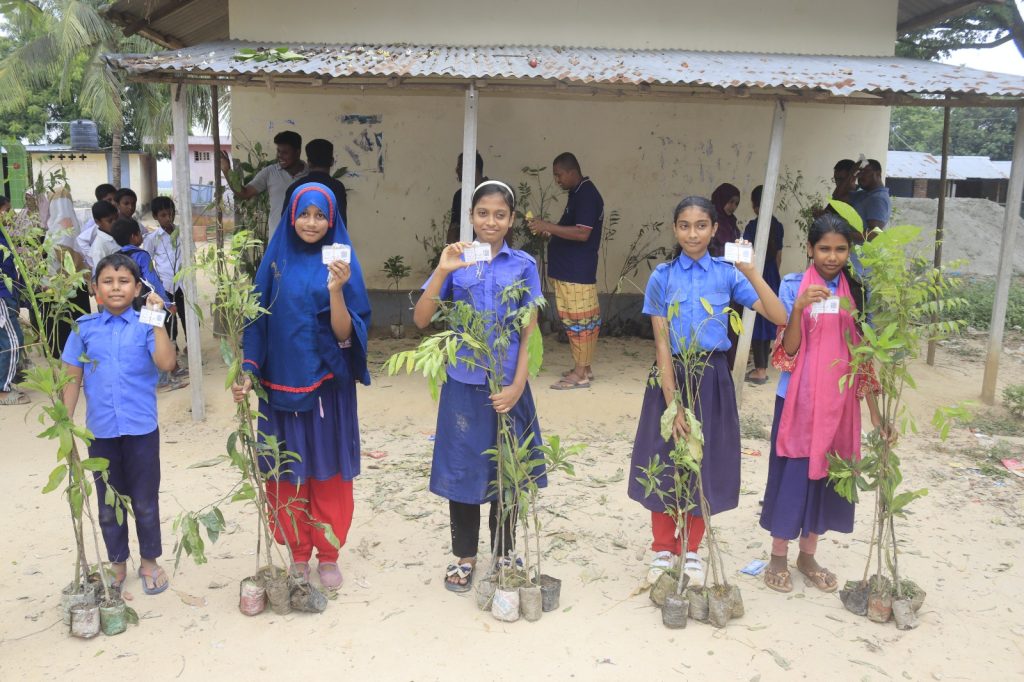
Recognising this, PKSF has launched a tree-planting initiative through the ECCCP-Drought project across educational institutions in the three districts. The programme aims to involve students in restoring the region’s green cover while addressing a familiar problem: many saplings planted in the past have failed to survive because they were not properly cared for.
Around 1.0 million (10 lakh) saplings of fruit-bearing, medicinal and timber-producing species are to be distributed among students. These include neem, olive, arjun, wood apple, hog plum, sapodilla, jackfruit and other trees. So far, approximately 200 thousand (two lakh) saplings have been distributed and planted.
The initiative goes beyond simply handing out trees. Each student will receive five saplings and take responsibility for nurturing them. Every sapling will carry a unique QR code, allowing the project to track its growth and survival.
After a year, the project management unit will assess how well the students have cared for their trees. Those showing the greatest commitment will receive recognition, encouraging young people to take a lasting interest in protecting the environment.
Across the Barind region, signs of change are emerging in different ways. A canal that once lay dry is holding water again. A farmer who struggled with irrigation costs is finding relief. Another is learning to grow more rice with less water. And schoolchildren are taking responsibility for saplings that may one day provide shade, fruit and greenery to their communities.
None of these efforts alone can reverse the growing pressures of climate change. But together, they offer a practical way forward for a region where water scarcity has long shaped people’s lives and livelihoods.
As rainfall becomes less predictable and dry spells grow longer in north-western Bangladesh, the challenge is no longer simply to survive another dry season. It is to prepare for the years ahead.
For the people of the Barind region, bringing back water, replenishing underground reserves and restoring the green cover could be vital steps towards a more secure future.

Ziaur Rahman, Senior Journalist