PKSF, IFAD, FAO and WFP explore partnership for climate-resilient food systems
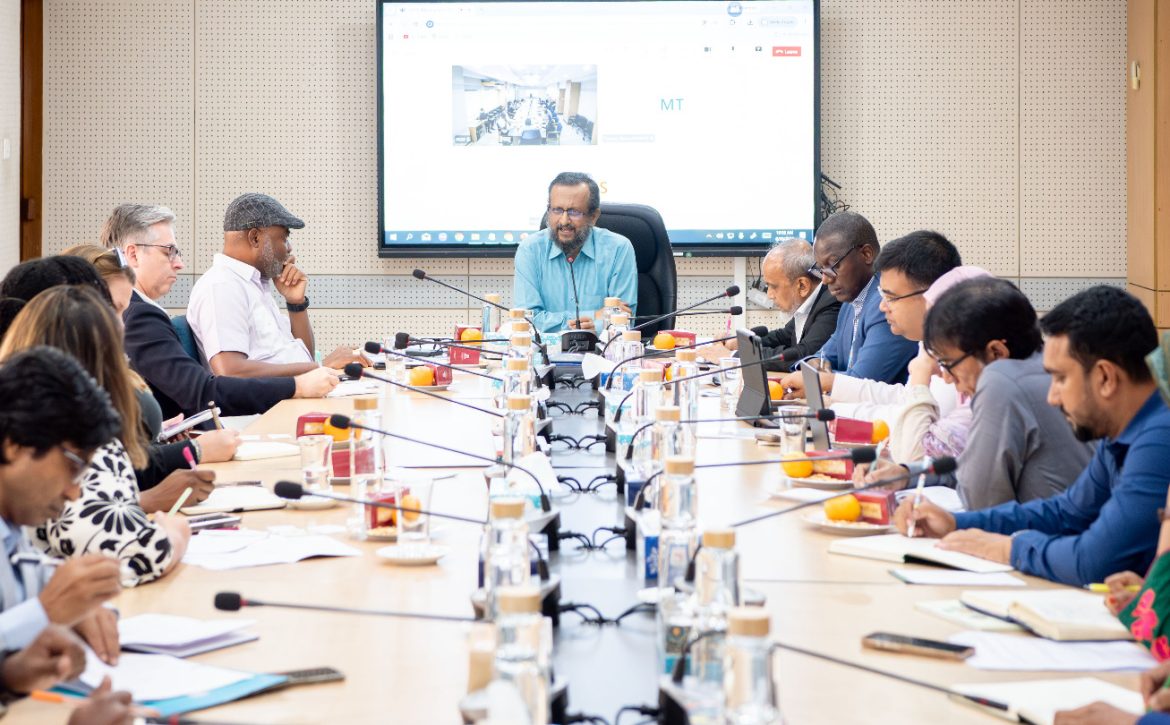
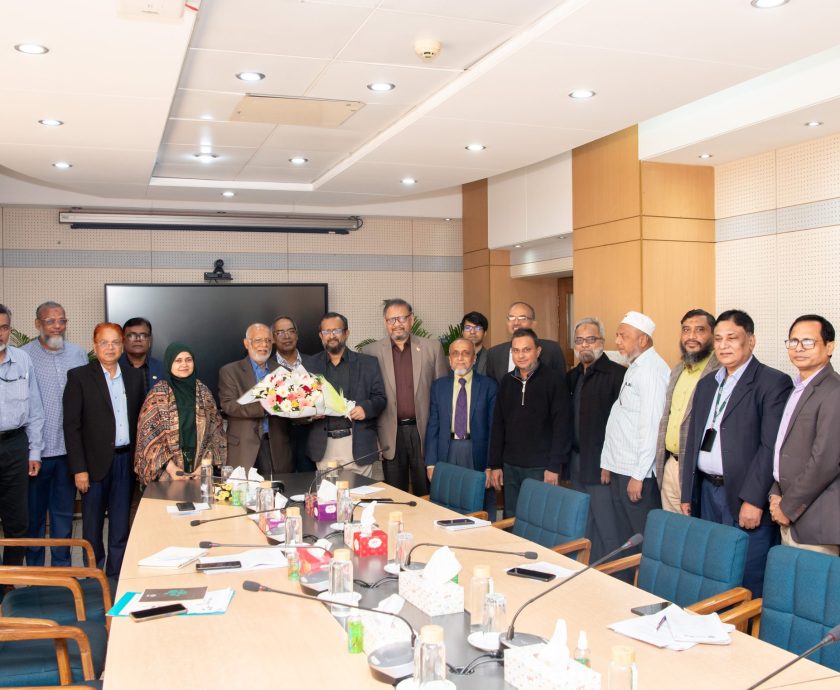
Palli Karma-Sahayak Foundation (PKSF) hosted a high-level consultation meeting with representatives from the International Fund for Agricultural Development (IFAD), the Food and Agriculture Organization of the United Nations (FAO), and the World Food Programme (WFP) to discuss potential collaboration under the proposed Growth for Climate Resilient and Environmental Entrepreneurship and Nutrition (GREEN) Project.
The meeting focused on strengthening partnerships to support climate-resilient agriculture, food security, nutrition, agroecological technologies, sustainable entrepreneurship development, and food systems transformation in Bangladesh.
The meeting was chaired by Md Fazlul Kader, Managing Director of PKSF. Dr Valantine Achancho, IFAD’s Country Director for Bangladesh; Maribeth Black, Deputy Head of Programme, World Food Programme (WFP); Dia Sanou, Deputy Country Representative, Food and Agriculture Organization (FAO) Bangladesh and Dr Akonda Rafiqul Islam, Deputy Managing Director, PKSF spoke on the occasion. Other officials from PKSF, WFP, IFAD and FAO were also present in the meeting.
During the discussion, Dr Achancho emphasized that IFAD’s support extends beyond financing. “We provide loans through Bangladesh government for technical training and capacity-building support to beneficiaries to ensure sustainable development outcomes,” he said.
Speaking at the meeting, Md Fazlul Kader highlighted the importance of promoting Bangladesh’s microenterprise sector as a driver of inclusive growth. “Finance alone cannot create magic. Sustainable transformation requires a combination of finance, technical support, market access, innovation, and capacity development,” he commented.
The PKSF Managing Director further emphasized on PKSF’s focus on demand-driven technical assistance, low-cost interventions, value-added agriculture, resource-efficient and cleaner production (RECP), and market-based solutions that remain sustainable beyond project completion. He also stressed on the need for internationally recognized food testing laboratories and certification systems to strengthen food safety, quality assurance, and export competitiveness.