logotype
  • Who We Are
      • About Us
      • Governing Body
      • General Body
      • Organogram
      • Our Team
      • Partner Organizations
      About Us


      In the 1980s, the Government of Bangladesh felt the need to establish a specialized institution for poverty alleviation through employment generation. After years-long discussions with development partners, different ministries and top development experts, the GoB finally decided to found Palli Karma-Sahayak Foundation (PKSF). This apex development organization formally came into being on 13 November 1989, after the President of Bangladesh approved the proposal. Ever since, PKSF has been working relentlessly to fight poverty and improve lives across the country.    Read More…

      Our Mission Our Vision History of PKSF

      Governing Body

      The Governing Body, subject to the general control and supervision of the General Body, holds the responsibility to pursue and help achieve the goals of PKSF. It holds the financial control of the organization, including approval of projects and making grants, donations, loans or other financial assistance to the Partner Organizations (POs).

      Governing Body Members  
      General Body

      The General Body of PKSF is in charge of making all policy decisions of the Foundation. It guides the Management to help translate them into reality through manifold activities dedicated to alleviating poverty with focus on employment generation.

      General Body Members  
      Organogram

      PKSF, an apex development institution established by the Government of Bangladesh, works through an integrated network in its organizational structure to ensure that all employees, irrespective of their ranks, work towards realizing its proclaimed vision and mission. PKSF officials are morally and strategically motivated through different meetings and necessary training sessions to demonstrate skills and efficiency in performing their duties with a commitment to their profession and society.

      Organogram  
      Our Team

      PKSF works in more than 223 partner organizations, helping to achieve the eradication of poverty and the reduction of inequalities and exclusion. We help people develop policies, leadership skills, partnering abilities, institutional capabilities and build resilience in order to sustain development results.

      Staff Profile
      List Of PKSF Chairmen
      List Of PKSF Managing Directors

      Partner Organizations

      Through its Partner Organizations (POs) PKSF provides financial assistance and institutional development support to appropriate organizations for implementing sustainable inclusive financial programs for reduction of poverty through creating productive employment opportunities for the moderate and ultra poor, small and marginal farmers and micro-entrepreneurs.

      PO List PRA Sheet & Guidelines Bangla QR ব্যবহারিক সহায়িকা

  • What We Do
      • Programs
      • Projects
      • Journey of PKSF
      • Capacity Building
      • Special Interventions
      • Innovation
      Programs

      The 20 million people that PKSF works with across the country include the extremely poor, ethno-culturally and socio-economically disadvantaged people, and microentrepreneurs. For them, PKSF makes appropriate interventions that are not time-bound. These we officially call ‘programs’. They remain in operation for as long as there is demand in the field. These programs are operated solely with PKSF’s own financing.

      List of Programs  
      Projects

      PKSF’s activities have always been demand-driven. Hence, the nature of its interventions constantly evolves with the changing needs of people. In order to ensure services that are out of the purviews of its programs, PKSF takes up tailor-made projects with specific objectives. Various development partners co-finance such projects that usually have a specific duration.

      Ongoing Projects Completed Projects

      Journey of PKSF

      PKSF supports 19.96 million poor and disadvantaged people across the country through different demand-driven programs funded by PKSF. These programs adapt to the evolving needs of the communities involved. Additionally, PKSF undertakes specific, time-bound projects, co-financed by development partners, to further address the requirements of the poor and the enterprising people for steering forward their dreams of a more prosperous future.

      See More  
      Capacity Building

      The Training Unit of PKSF aims to develop the capacity of officials of its Partner Organizations (POs). It arranges highly customized training courses with specially designed training modules covering a wide range of areas in management of financial services, sustainable development, and poverty alleviation.

      Training Unit

      Special Interventions

      Palli Karma-Sahayak Foundation (PKSF) formed the Special Fund in 2010 to provide special assistance to the poor and the extremely poor people in humanitarian or social crises and natural disasters. Participants of different PKSF programs/projects, including staff members of PKSF and its Partner Organizations (POs) can seek support from the Fund. In addition, helpless and ailing freedom fighters, teachers and development workers are supported under the Special Fund. A four-member committee headed by the Managing Director of PKSF operates the fund.

      Special Fund Programme Support Fund Sahos

      Innovation

      Innovation for Public Services

      The Cabinet Division of the Government of the People’s Republic of Bangladesh has formulated an ‘Innovation Strategic Plan and Evaluation Guideline 2015’ to promote innovative practices in Public Services. In line with this, PKSF has formed a 6-member innovation team under the leadership of a Deputy General Manager. So far, PKSF has piloted five innovative ideas: 1. Disabled–friendly Mobile Training, 2. Smart Fund Transfer, 3. Real-Time Online Training, 4. Skill Learning Platform, and 5. Monitoring and Evaluation of Health and Nutrition Services to the Extremely Poor.

      Innovation Corner  
  • logotype
  • Knowledge Bank
      • Publications
      • Research
      • News Center
      • Multimedia Corner
      • Blogs
      • Audit
      • PKSF Library
      • Resource Center
      • Environment & Climate Change
        Knowledge Hub
      Publications

      PKSF publications showcase the organization’s thought leadership and expertise and play a key role in fulfilling our mandate to support the realization of the SDGs and encourage development.

      Annual Report

      Newsletter

      Special Publications & Booklets

      Research

      PKSF researches showcase the organization’s thought leadership and expertise and play a key role in fulfilling our mandate to support the realization of the SDGs and encourage global development.

      Our Research Works  
      News Center

      Our News centre is a one-stop shop for multimedia press coverage and in-depth information on development-related issues. We provide news announcements, press releases and statements by PKSF leadership.

      News Center  
      Multimedia Corner

      Our Multimedia Corner is a one-stop shop for multimedia press coverage and in-depth information on development-related issues. We provide news announcements, press releases and statements by PKSF leadership.

      Apps Corner

      Multimedia Corner  
      Blogs

      Stories from the Grassroots

      Stories from the Grassroots

      Interview

      Audit

      Our responsibility is to express an opinion on these financial statements based on our audit. We conducted our audit in accordance with Bangladesh Standards.

      Audit Committee

      Audit Reports  
      PKSF Library

      PKSF Library is a knowledge hub with books, journals, reports and other resources on microfinance and development. It offers a modern, automated system to support learning, research and informed decision-making.

      PKSF Library

      Resource Center


      The PKSF logo is used in all kinds of materials related to PKSF’s publications and communications.

      Logo

      PKSF Strategic Plan (2025-2030)

      Integrity Strategy

      Internship Report

      All Policy Documents

      MoUs

      Environment & Climate Change
      Knowledge Hub

      This Knowledge Repository is PKSF’s official open access repository for its research outputs and knowledge products.

      Knowledge Hub  
  • Connect With Us
      • Career
      • Procurement
      • New PO Enlistment
      • OLRS for PKSF
      • Complaint
      • RTI (Right To Information)
      • Citizen's Charter
      • Notice Board
      • Contact
      Career

      Join us to undertake programs in a dynamic environment, implementing them throughout the country and manage its affairs as a part of an independent organization.

      PKSF Career Opportunities  
      Procurement

      Transparency is the core principle of PKSF’s procurement. An open and transparent procurement process improves competition, increases efficiency and reduces the threat of unfairness or corruption. To see the current tender circulars please follow the below link.

      Annual Procurement Plan (APP)

      Procurement Circulars  
      New PO Enlistment

      To enlist a new PO please follow the guidelines mentioned below. If you have any questions you can visit the FAQs page and also contact us regarding your queries.You can download the New PO Application Form form below.

      New PO Enlistment Notice

      PO Application Form

      PO Application Form Guidelines

      New PO Enlistment FAQs

      OLRS for PKSF

      Online Reporting System (OLRS) is an reporting application for the Partner Organizations of PKSF. To access the OLRS application please follow the below link.

      Online Reporting System (OLRS)  
      Complaint

      If you have any complain related to PKSF, please fill the required fields in the following Complaint Form page.
      (For PKSF’s Policy on Complaint Redress System Click Here )

      Complain Entry  
      RTI (Right To Information)

      RTI (Right To Information)  
      Citizen's Charter

      Citizen's Charter  
      Notice Board

      On the notice board you will find all kinds of internal notices of PKSF. Also, notices of various government departments related to the work of PKSF are also available here.

      View All Notices  
      Contact

      You can contact us with general questions about PKSF or about more specific topics by filling out the contact form on our website. We will try to get back to you as soon as possible.

      Contact Us  
Blog Post
Home News Call for basic overhaul of Bangladesh’s skills development ecosystem
News
August 4, 2026

Call for basic overhaul of Bangladesh’s skills development ecosystem
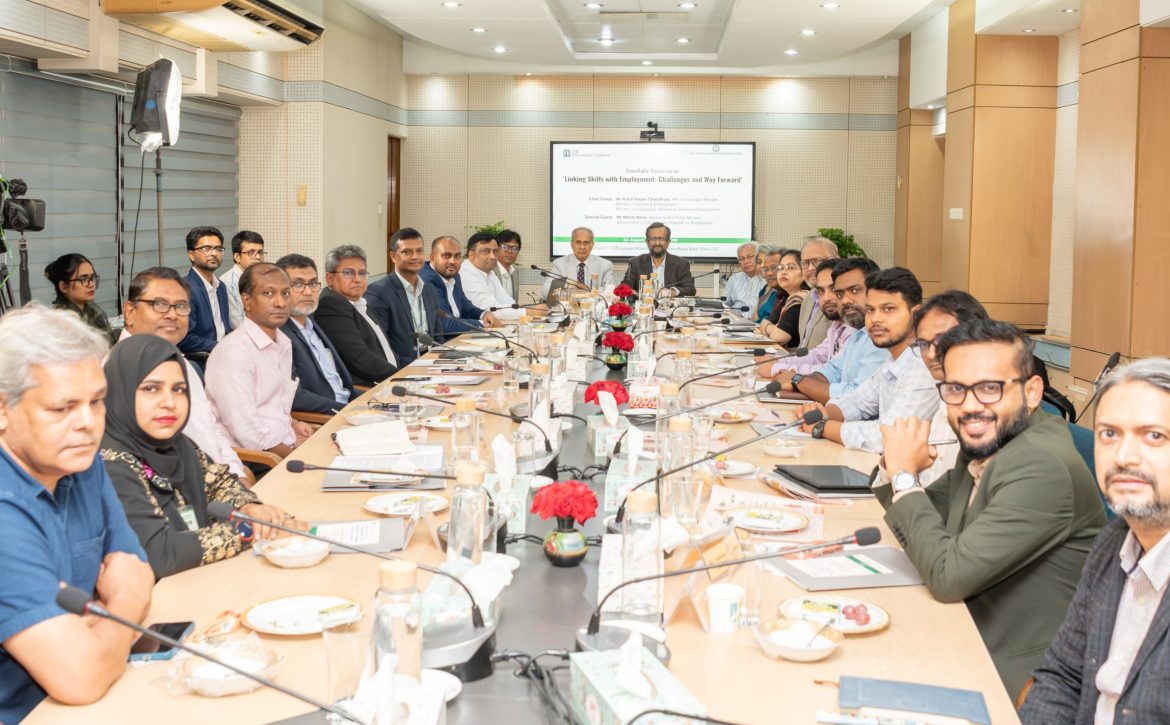
DSC_7478

Policymakers, economists, development practitioners and industry experts on Monday called for a fundamental overhaul of Bangladesh’s skills-development ecosystem.

They also observed that a persistent mismatch between education and labour-market demand is preventing the country from fully capitalising on its demographic dividend.

Speaking at a discussion titled “Linking Skills with Employment: Challenges and Way Forward” at PKSF Bhaban in the capital, they stressed the need for closer collaboration among government, academia and industry to ensure that training programmes produce employable graduates and internationally competitive workers.

The Financial Express in association with Palli Karma-Sahayak Foundation (PKSF) organised the event.

Managing Director (MD) of PKSF Md Fazlul Kader said Bangladesh must change its social perception of vocational education, arguing that technical education continues to receive lower social recognition than conventional academic qualifications.

“For better employment opportunities and skills-based education, we must move towards vocational education in line with global practices,” he said.

Mr. Fazlul Kader suggested that the government incentives should be redirected towards industries to encourage them to provide training, develop skilled workers and award recognitions, instead of focusing solely on subsidised loans.

He also highlighted the employment potential in Bangladesh’s informal economy, particularly in agriculture, livestock and value-added micro-enterprises, stressing the need for stronger forward and backward linkages to unlock the growth potential.

Describing modern agriculture as a highly-skilled profession, he noted that an increasing number of educated young people are entering the sector.

Referring to overseas employment, he observed that Bangladeshi migrant workers remained vulnerable because many of them lack formal skills and certification.

“Providing training and producing skilled manpower is essential to protect migrant workers from job losses and exploitation,” he said.

Quazi Moshrur-Ul-Alam, Senior Programme Manager of the PKSF’s RAISE project, said Bangladesh has established a training system, but it is yet to build a complete ecosystem connecting skills with employment.

“The problem is not a lack of jobs, but the absence of an effective linkage between skills and employment,” he said.

Highlighting the impact of practical skills training, a graduate apprentice Ashfakur Rahman shared how a RAISE-supported driving course enabled him to rebuild his family’s livelihood after his father’s death. He now works as a service engineer at Hyundai.

Director General of the Bangladesh Institute of Development Studies (BIDS) Dr A K Enamul Haque said Bangladesh faces a demand-side problem, as the economy fails to generate sufficient opportunities for science graduates and knowledge-based professionals.

“We continue to value clerical qualifications over practical knowledge, while industries lack incentives to innovate and absorb skilled graduates,” he said.

Professor Sayema Haque Bidisha of the Department of Economics at the University of Dhaka said Bangladesh needs to address the persistent mismatch between the supply of graduates and industry demand.

She said both domestic and international labour market requirements should be carefully assessed so that skills development programmes reflect actual market demand.

“This requires coordinated efforts among academia, industries and policymakers,” she added.

ATM Mahbubul Karim, Project Director and Joint Secretary of the Wage Earners’ Welfare Board (WEWB), underscored the importance of strengthening the capacity of recruitment agencies to facilitate sustainable overseas employment.

The World Bank Task Team Leader Aneeka Rahman also called for an integrated skills ecosystem in which curricula and training delivery are directly aligned with labour market requirements.

The FE News Editor Anisur Rahman stressed the importance of strengthening foundational education, arguing that basic education and skills development should be linked to reduce school dropout rates and prepare students for vocational training.

Md Ashfaqur Rahman Khan of the International Organization for Migration (IOM) Bangladesh said the country lacks reliable labour market data to determine future demand for different occupations, calling for institutional reforms instead of fragmented project-based interventions.
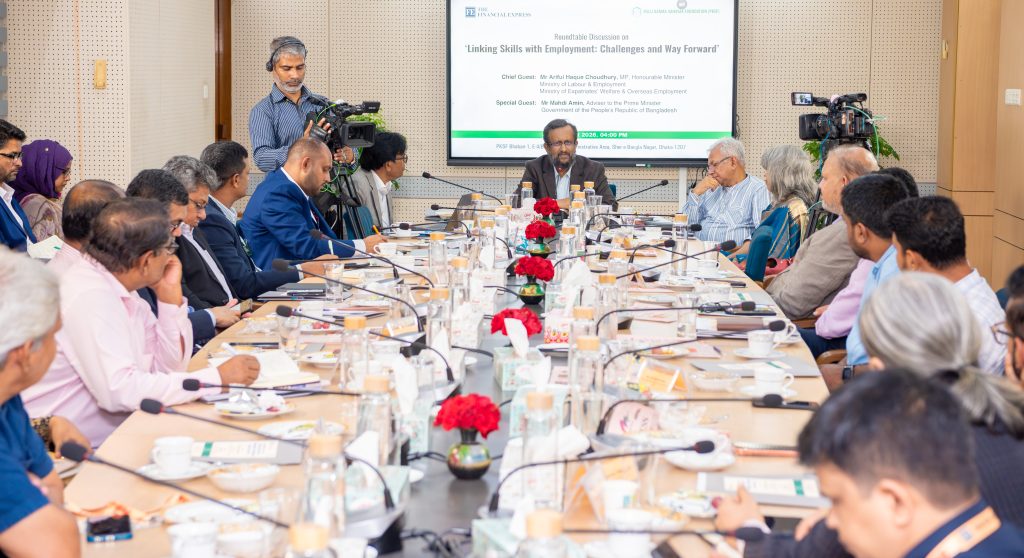
Executive Director of UCEP Bangladesh Dr Md Abdul Karim said Bangladesh’s education system remains heavily skewed towards general education, unlike developed countries where technical graduates dominate.

“This imbalance leaves many graduates unemployed while industries struggle to recruit skilled workers,” he noted.

Executive Director of ESDO Dr Md Shahid Uz Zaman stressed the need for addressing the psychosocial challenges faced by marginalised youth alongside technical training, proposing the creation of “job banks” to better support employment transitions.

Dr Md Towfiqul Islam, member, Governing Body of PKSF suggested introduction of foreign languages such as Japanese and Arabic from the primary level to improve overseas employment prospects, saying language proficiency could significantly enhance earning potential.

Joint Secretary of the Ministry of Finance Kamrul Hoque Maruf stressed the need for anticipating future labour market requirements in emerging fields such as machine learning and industrial automation, supported by tracer studies to evaluate employment outcomes.

Deputy Managing Director of PKSF Md Mashiar Rahman said successful training initiatives should be expanded through enterprise financing models, enabling experienced entrepreneurs to train additional workers and generate large-scale employment.

Towhidur Rahman of the International Labour Organization (ILO) warned that nearly 90 per cent of Bangladeshi migrant workers still lack internationally recognised skill certificates, weakening their bargaining power and exposing them to exploitation abroad.

Additional Secretary Mohammed Walid Hossain concluded the discussion by highlighting the need to embrace emerging technologies, including 3D printing and industrial automation, through a practical, industry-oriented approach to skills development.

Moderated by Shiabur Rahman Shihab, FE online head, the discussion was attended by representatives from government agencies, development partners, academia, international organisations and the private sector, who agreed that stronger industry participation and demand-driven training are essential to creating sustainable employment and enhancing Bangladesh’s global competitiveness.


Employment PKSF PKSF MD RAISE Roundtable Skills The Financial Express
34
4 Likes
PKSF and BIDS to collaborate on research and evidence-based policymaking

PKSF and BIDS to collaborate on research and evidence-based policymaking

August 2, 2026

You might also be interested in:

News
August 24, 2023

Written exam result of “Assistant Manager”

By PKSF Admin
RHL 1
News
January 11, 2026

PKSF MD calls for maximum utilization of climate investment to protect vulnerable communities

By Masum Al Jaki

Recent News

  • Call for basic overhaul of Bangladesh’s skills development ecosystemAugust 4, 2026
  • PKSF and BIDS to collaborate on research and evidence-based policymakingAugust 2, 2026
  • PKSF launches ‘GREEN’ project to scale up climate-resilient initiatives, benefiting over 250,000 householdsJuly 30, 2026
  • PKSF signs credit guarantee agreements with 11 banks, 1 NBFIJuly 21, 2026
  • SMART project: top-performing Partner Organizations honoredJuly 9, 2026
Gallery


logotype

Palli Karma-Sahayak Foundation (PKSF)TM

Facebook-fYoutube

PKSF Bhaban-1, Plot: E-4/B, Agargaon Administrative Area

Sher-e-Bangla Nagar
Dhaka-1207

pksf@pksf.org.bd

02222218331-33, 02222218335-39

02222218341, 02222218343

Our Team Partner Organizations Programs Projects
Research News Center Career Procurement

Copyright © 2022 PKSF. All Rights Reserved.