
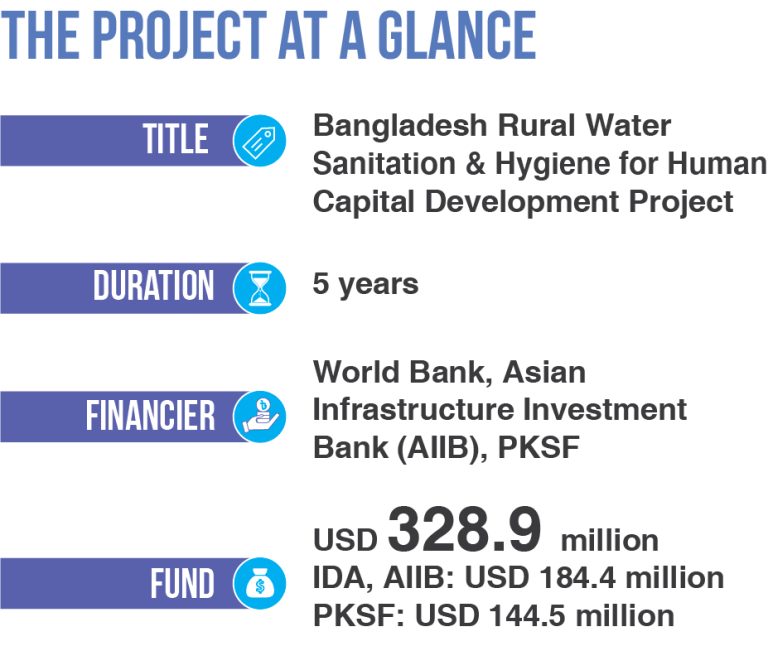
Access to safely managed water supply, sanitation, and hygiene (WASH) facilities is one of the development prerequisites. Despite significant progress in the economic development of Bangladesh, inadequate WASH services in rural areas remain a major concern for the country. The SDG-6 aims to tackle challenges related to drinking water, sanitation and hygiene as well as to water-related ecosystems. PKSF has thus adopted a demand-driven strategy to promote hygienic toilets by using lending instruments.
Bangladesh Rural Water, Sanitation & Hygiene for Human Capital Development (BD Rural WASH for HCD) Project, co-financed by the Government of Bangladesh, the World Bank and the Asian Infrastructure Investment Bank (AIIB), with the aims of improving access to safely managed water supply and sanitation in selected areas of rural Bangladesh and strengthen institutional capacity for water and sanitation services. The Department of Public Health Engineering (DPHE) and PKSF are jointly implementing specific components of the project.
Partner Organization (PO) and Project Area information
The project is currently being implemented in 182 Upazilas of 30 Districts under all 8 Divisions by 89 Partner Organizations (PO) of PKSF.
The project locations are shown in the table:
Division | District |
Barishal | Patuakhali, Pirojpur, Barishal |
Chattogram | Brahmanbaria, Chandpur, Chattogram, Cumilla, Feni, Laxmipur, Noakhali |
Dhaka | Manikganj, Rajbari |
Khulna | Bagerhat, Khulna, Magura, Jhenaidah |
Mymensingh | Mymensingh, Jamalpur, Sherpur |
Rajshahi | Chapainawabganj, Pabna, and Bogura |
Rangpur | Gaibandha, Kurigram, Lalmonirhat, Nilpphamari |
Sylhet | Sylhet, Habiganj, Sunamganj and Moulvibazar |
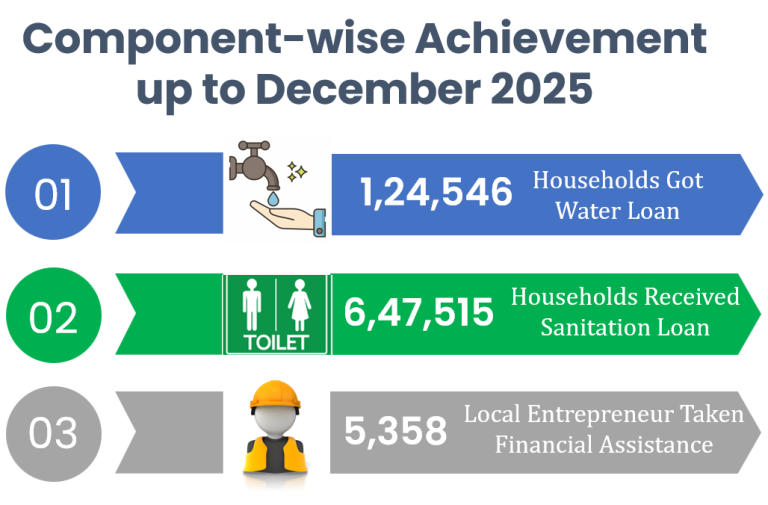
Construction of Household Sanitation Facilities
To achieve SDG Target 6.2, access to adequate and equitable sanitation and hygiene for all and end open defecation, paying special attention to the needs of women and girls and those in vulnerable situations, the project is also providing support to construct Safely Managed twin-pit toilets at the household level and the target is 1.0 million households.
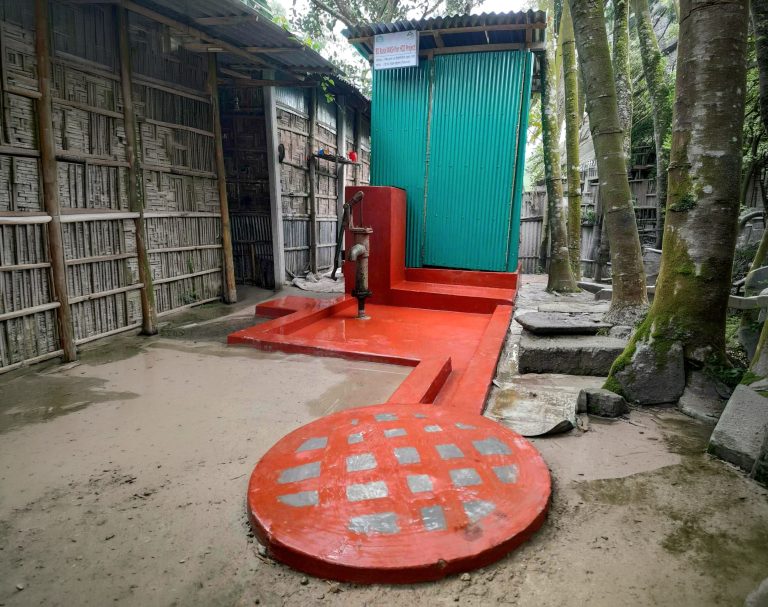
Capacity building of LE: One of the key stakeholders of the project’s implementation in the field is the Local Entrepreneurs (LEs). After receiving proper training and other assistance, they are constructing safely managed twin pit toilets and safely managed water supply systems at the household level. A total of 3,152 LE received hands-on training. Besides, 352 women LEs have received training for business development and promotion of sanitary napkins.
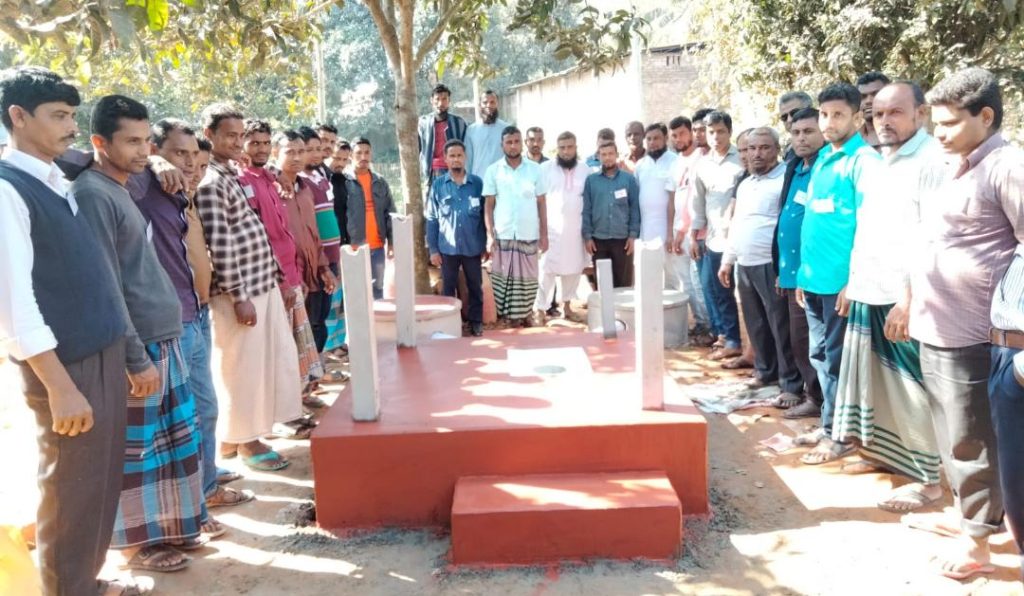
Capacity building of PO Staff: To enhance the knowledge and expertise on WASH, along with microfinance, capacity building is essential for the field-level staff of PO. The project has the target to develop the capacity of all staff on the WASH concepts, construction, and monitoring of WASH facilities. A total of 11,105 PO staff have been capacitated by the Technical Assistant (TA) Firm and Project Management Unit (PMU).
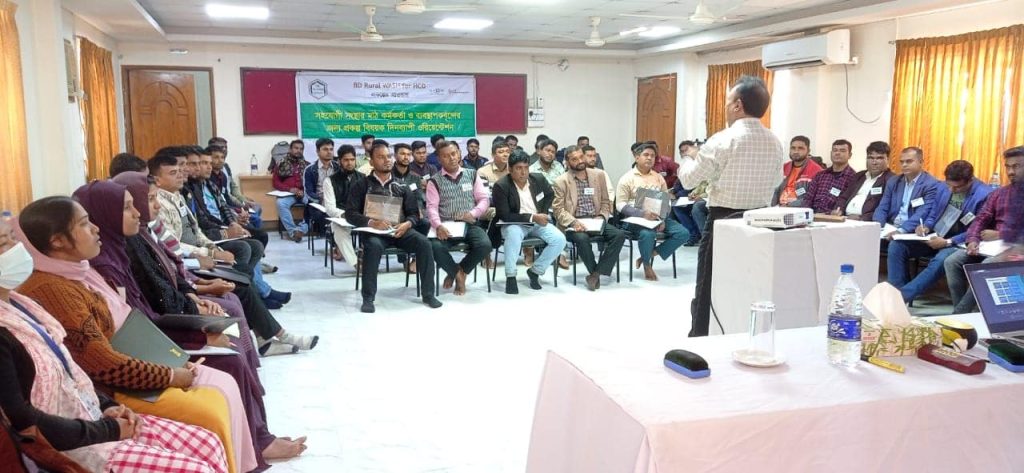
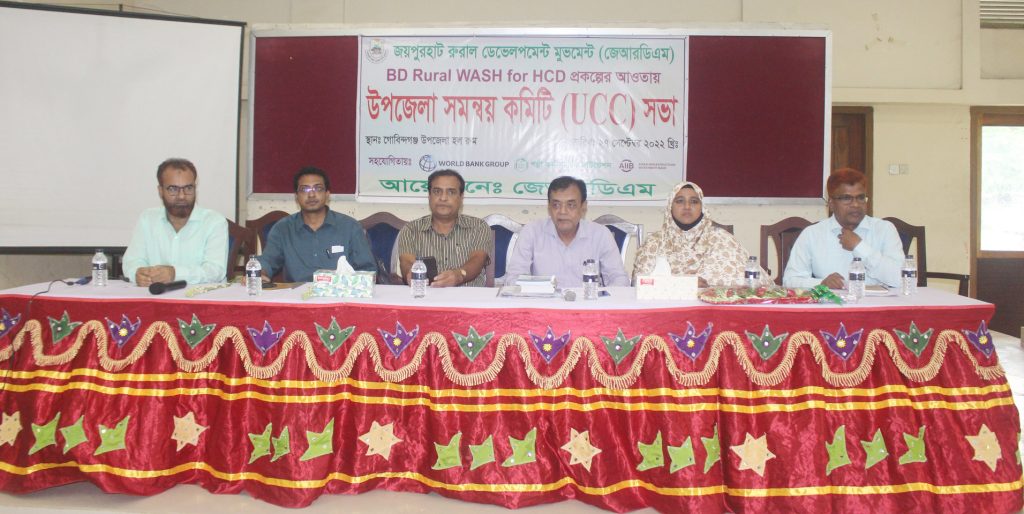
Upazila Coordination Committee (UCC) Meeting:The core purpose of this committee is to ensure proper coordination among the project-implementing Partner Organizations at the Upazila level. The meeting is organized once every three months to discuss and coordinate the project’s implementation strategy, LE management, tackling the overlapping issues, training and so on. Till December 2025, a total of 1371 meetings were held by the POs where PMU members have participated.
Digital Reporting System (DRS)
A digital reporting system is a modern, technology-driven mechanism designed to collect, process, analyze, and share data in a structured and efficient way, replacing the limitations of manual or paper-based reporting. It integrates information from various sources into a centralized platform, allowing users to generate real-time reports, dashboards, and visual analytics that support evidence-based decision-making. Such systems enhance transparency and accountability by minimizing human errors, standardizing formats, and ensuring data accuracy. They are also highly time-efficient, enabling organizations to quickly track progress, monitor key indicators, and respond to challenges. Additionally, features like cloud storage, mobile accessibility, and interactive dashboards make these systems more user-friendly and adaptable to various institutional needs, ultimately enhancing communication, efficiency, and accountability in organizational processes.
A GPS-based Digital Reporting System (DRS) has been developed by PKSF under the project of Bangladesh Rural Water, Sanitation and Hygiene for Human Capital Development (BD Rural WASH for HCD) Project to improve the efficiency of data collection, storage, analysis, and reporting. This system was developed, integrating a web portal, mobile application, and a robust database. The system enables the Project Management Unit (PMU) and Other Professionals of PKSF to monitor and evaluate the project-related activities effectively.
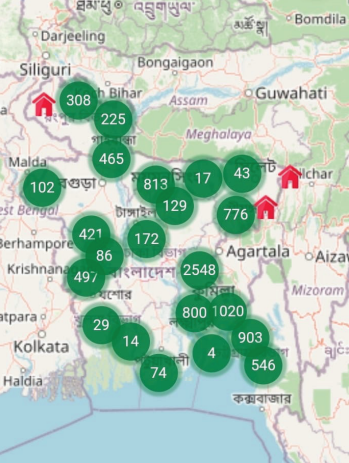
Through this system, GPS location and images of project-designed WASH facilities were captured, analysed, and visualized on a map, which ensured the physical existence of constructed safely managed WASH facilities at the household level. Also, a professional can conduct onsite and offsite monitoring by using this system. The Map feature of this system is integrated with Google Maps, which helps to find the route direction of the selected WASH facilities to visit. The system is also collecting real-time data, which helps to make faster decision-making, improve operational efficiency, and enhance borrowers’ experiences.
Annual Coordination Meeting
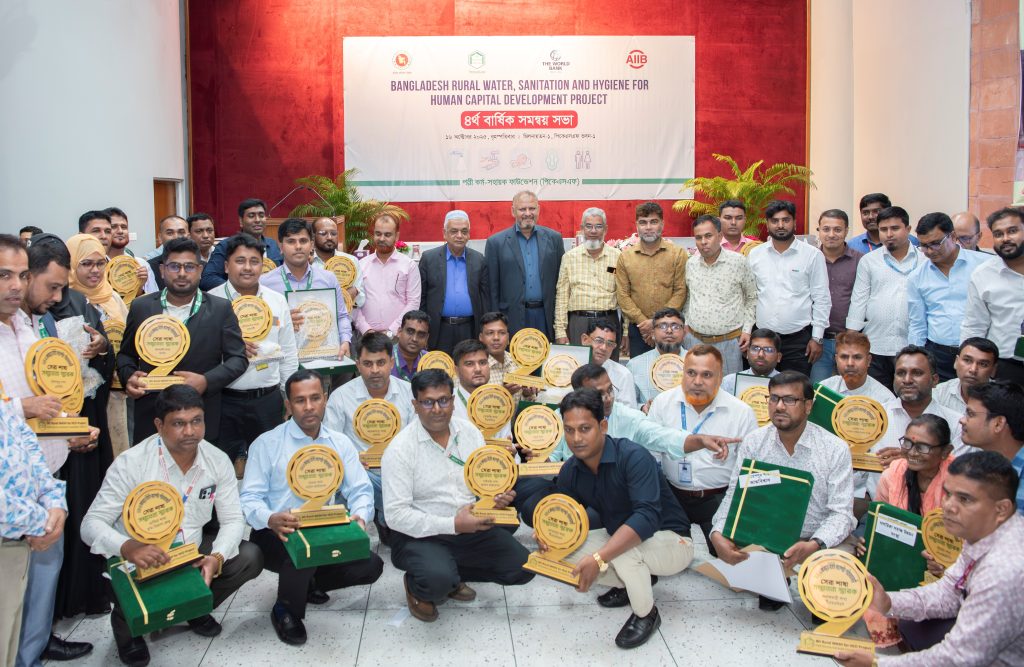
The 4th Annual Coordination Meeting of the Bangladesh Rural Water, Sanitation and Hygiene for Human Capital Development (BD Rural Wash for HCD) project was held at PKSF auditorium on 16 October 2025. Mr. Md. Fazlul Kader, Managing Director of PKSF and the Chief Guest of the meeting, expressed his satisfaction with the remarkable success of the project and extended his thanks to all present. By presenting the real picture of the dire sanitation situation in rural Bangladesh during the 1990s, he described the current progress of the ongoing project as a major success. Mr. Md. Jashim Uddin, Additional Managing Director of PKSF, extended his gratitude to all those involved with the project. He further mentioned that the achievement was not easy, and to translate the adopted plan into reality, the PKSF management, panel leaders, and concerned dealing officers, all relevant
officials of the Project Management Unit, Consultants, and officials at all levels of the concerned Partner Organizations had to overcome numerous challenges. Md. Abdul Matin, Project Coordinator of the BD Rural WASH for Human Capital Development Project, welcomed all participants and, in his opening remarks, stated that since 2021, PKSF has been making continuous efforts through this project to effectively support the People’s Republic of Bangladesh in achieving SDG 6 targets 6.1 and 6.2. Rokeya Ahmed, Senior Water Supply and Sanitation Specialist, World Bank, also spoke in the meeting.
Executive Directors and focal persons from 88 project implementing Partner Organizations (POs) participated in the conference and shared their views during the open discussion session. Another session was conducted for the Prize Giving Ceremony to 104 Best Branch Managers who were able to construct at least 108 Toilets in six months.
Related Thematic Area: